We have a pot of dark purple dried beans with little African spiced beef sausages simmering tonight. They smell good and summery. . . almost like home. I made some coleslaw and sliced some red onion. Now, if only we had some cornbread. There is no cornmeal here.
I want to tell you about this place. We had never heard of Kuala Lumpur until we began planning this trip. When locals mention the town, it sounds like “Kwala Lumpa.” They also shorten it to KL.
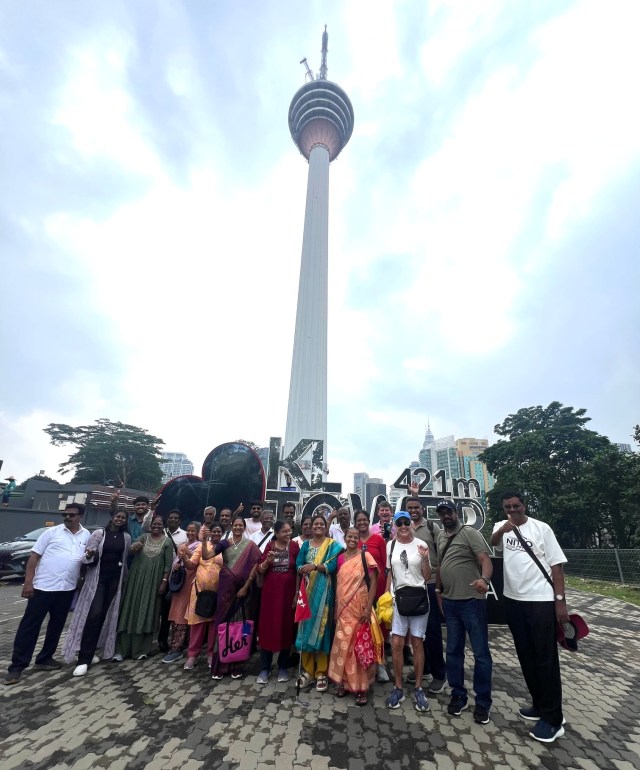
After months of tired-looking towns and jungle scenery, the vibe in this city is an exciting change. While the air is dense with stifling humidity and temperatures hover around hellish levels year-round, the city is gorgeous, modern, and superbly clean. And it is indeed a city; there are 2.11 million people here. Counting the metro area, there are over 8 million people here. Its skyline is graced with over 200 skyscrapers standing over 500 feet tall. NYC has more skyscrapers, but there, the buildings are cramped together in a small space; here, there are trees and space between them, and its architects seem to have competed for the most beautiful or unique designs. The grand landmarks are the 1,400-foot KL Tower built in 1991 as a telecommunications tower, and the 88-story glimmering Petronas Twin Towers, the world’s tallest twin towers, each standing just under 1,500 feet tall. Then rounding off the skyline’s glory is the eye-popping, iconic 118-story Merdeka 118 building, the pride of the city. The slender, graceful Merdeka 118 Building is just 500 feet shorter than Dubai’s 2,700-foot-tall Burj Khalifa, making it the world’s second-tallest building. Quite ironic, I think, that insanely rich Dubai owns the tallest building in the world while Malaysia has the second.
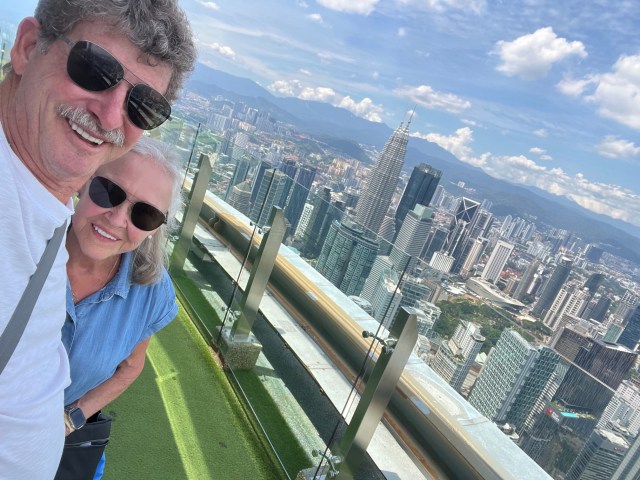
Over the years, Stan and I have visited some of the world’s great buildings and towers: the Burj, the Eiffel Tower, London’s Shard, the Shanghai Tower, the 1958 Tokyo Tower, and of course, the Empire State Building. We can’t seem to pass one up. On one of the few clear days we have had here in Kuala Lumpur, we viewed the city from the KL Tower, and before we leave the city, we will visit the observation deck of the Twin Towers. Visiting the mega-tall Merdeka 118 building is a no-go, though, as its observation floor is still under construction.
Stan and I are in an apartment on the 20th floor of a squeaky-clean Chinese-owned hotel/apartment complex. While 50% of the population here is Islamic, the majority of Kuala Lumpur’s wealth belongs to the Chinese. Our nearby hypermarket, located in a big mall, compares to Whole Foods, but there is no pork and no ground meat of any kind in its meat cases. We are in an area near bus stops, trains, and zillions of restaurants, some swanky and some family-owned, but all delicious and relatively cheap compared to restaurants at home and in other big cities. They do know how to eat here!
From our apartment terrace, we can see Kampung Baru, the only primitive Malaysian village remaining in the area. Ownership of the land and old wooden houses was granted by the Sultan in 1899 to the generations of Malays living there, allowing them to retain their village lifestyle within the city. The area is bordered by KLCC (Kuala Lumpur City Centre) and the Klang River, which once flooded the city each year, explaining why most of the houses in Kampung Baru stand on Malaysian hardwood stilts. Now, however, the river is encased in a concrete canal for flood control. We were invited to the home of a 71-year-old man who still lives in the village house where he was born. Never married, “though engaged three times,” he added, his house will remain in his family, going to his niece upon his passing. He showed us the water marks on his house from floods that destroyed all his household contents; he told us about horrific events that his mother witnessed on his street during the Japanese occupation of the city, and proudly showed us photos of himself with the King who came to visit the village in 2024. When the call for prayer sounded from the local mosque, he excused himself and retreated to a back room to pray.
Without a doubt, this is a majestic city — and in Malaysia??? Among the fastest-growing metropolitan regions in Southeast Asia, KL is a major center for finance and economic development. Yet it has enormous city parks, botanical gardens, and an eco-garden at the foot of the KL Tower where one can meander through the rainforest park on an aboveground canopy walkway and, if lucky, find monkeys and tropical birds. While we did not see monkeys that day, we were a bit surprised to see families of bats hanging just above our heads on the underside of the canopy tower platforms. Seeing them made it easy to check off the day’s wildlife find. It rained while we were there. It poured. Good thing we had our plastic ponchos! They kept the rain off us, but our clothes became wet — from sweat.
Yes, we are still having fun on this year’s adventure, a bit weary of the heat and the humidity, but still enjoying seeing and learning about this part of the world. The sights and experiences are amazing. Just a weeks ago, we were in the jungles of Borneo, and now here we are in this bustling city filled with big business, hospitals, universities, shopping, and parks, as well as representations of almost every major religious affiliation in the world.
Bursting with restaurants, Kuala Lumpur is for foodies. At night, the streets twinkle with restaurant signs. To be sure, Stan and I are a little tired of rice, but otherwise Malay food is fun to try; it often has an Indian, Chinese, or Korean influence. Many people here are vegetarian, but chicken and fish are also popular. Regardless of the main dish, a big side of rice is inevitable, like it or not.
I have said this many times, but again, the overwhelming joy in our travels is meeting local people. Over and over again, Stan and I find that regardless of where we are, people of the world have few differences. We all seem to like meeting each other, sharing stories, and making memories and friends, even if just for a few minutes. Since arriving in India in March this year, we have been in places where Christianity is not the major religion. We have spent time with Hindus, Buddhists, Taoists, Muslims, and others. I know it may sound strange to say, but although we may have differing spiritual philosophies, we, the people, are the same, and given a chance to get to know one another, we can get along.
People here, mostly practicing Muslims, are no exception. They are kind, welcoming, and wish to know us. I think many people fear Islamic people. I can only speak from our experience. Yes, their culture is different; their celebrations and practices are different. Yes, they stop and pray five times a day. And yes, women and young girls cover their hair. But they do not seek to harm us, change us, or force us to live in their style. They are people, ordinary people, who tend to focus on family. They like to laugh and joke. They are curious and ask questions. They become educated and work. Some scrape by; some get ahead. Like us, they want to worship as they believe, live in peace, enjoy one another, and have a secure home and send their children off with tools to live a better life.
While it is important to pay attention, particularly to government objectives and initiatives, including our own, I hope to see the day when we all open our minds to the ways of others and put aside unfounded fear.










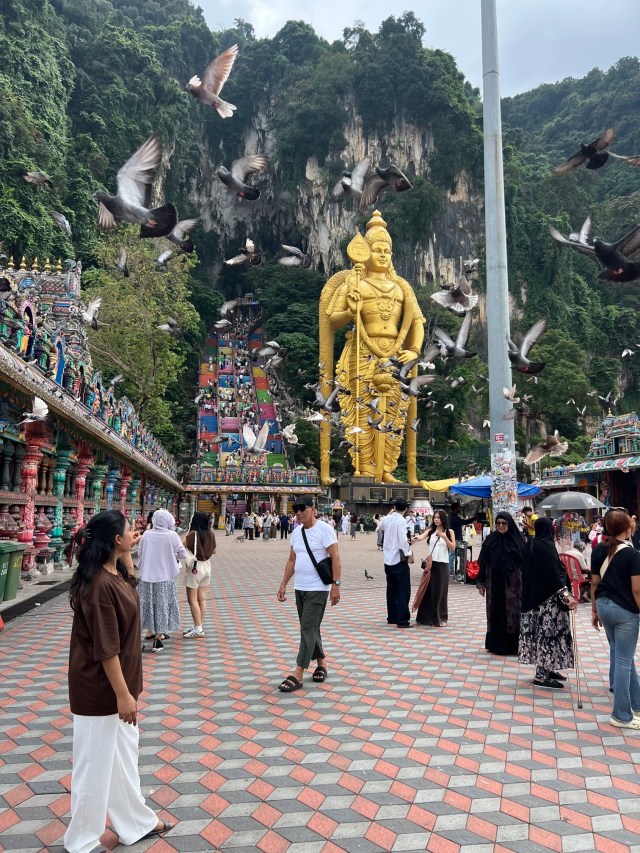


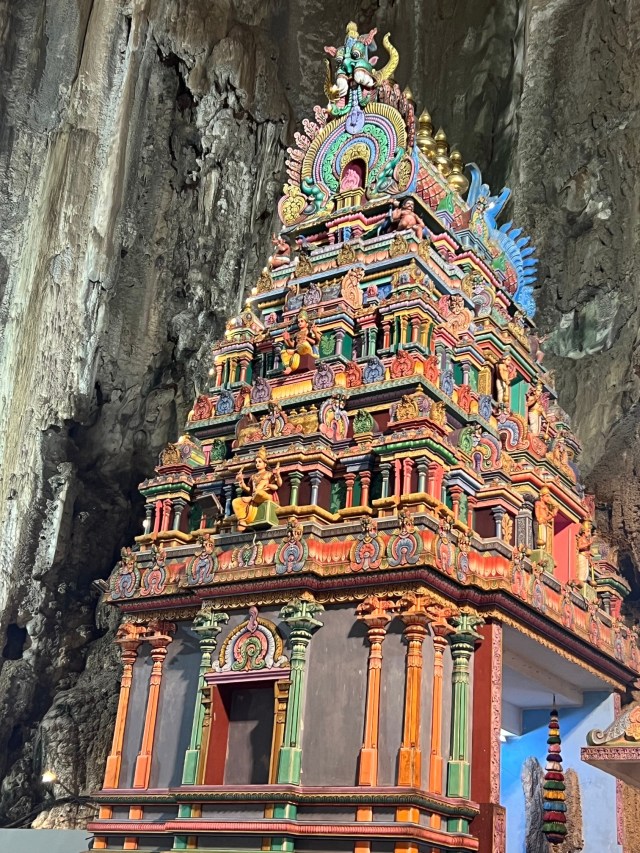


Wow!! Who knew?? ❤️🥰🥰❤️
Yes, who knew!!! This is a gorgeous city!
Janie, You mentioned how hot it is there, yet the women are all draped in layers of clothing from head to foot. Which religion is typical there and does their culture require women to cover themselves? What are the skyscrapers all used for? Are they full or empty built for investment?
The city is exotic!!
I just accidentally deleted a very detailed reply to your questions. Grrrr, not going to repeat it. In brief, as I mentioned in this story about KL, this is a multi-ethnic, multi-religion city but 50% of its people are Muslim. Women of the Islamic faith here wear hijabs as a tradition. It’s their choice. Their grandmothrs wore hijabs, their mothers did, and like dreaming of getting grown-enough to wear high heeels, young girls cannot wait to join in. But there are other reasons for wearing lots of clothing: people think clothes help keep them cool but primarily they cover themselves to keep the sun from making their skin turn more dark. No one wants to turn darker. In fact drug stores stock shelves of cosmetics to lighten the skin. But that’s the case throughout this part of the world and as I think about it, that’s true in most parts of the world. Just my observation, but it seems only American adults show bare arms and wear shorts. Regarding skyscrapr building occupancy, older building that don’t have the ammenities the newer ones do suffer with about a 50% occupany but long ago made their money. The gleaming skyscrapers, are in high demand and extremely profitable. Most have Chinese owners. In total the overall building occupancy rate in KL is near 80%, pretty dang good! Hope this helps, love you, and see you soon.
One last thought. KL is a very beautiful city, possibly one of the most beautiful I’ve ever seen. I’d truly fall in love with it if it weren’t so freaking hot — not just in August but all the time!