“Himalayan kingdom known for its unique GNH (Gross National Happiness).”
Buddhism is not just the primary religion in Bhutan; it is a way of life. It guides everything. Compared to many countries, there are fewer formal laws. A firm belief in Buddha eliminates the need for behavioral laws. From early childhood, Bhutanese people begin to study Buddhism with lessons and prayers not in schools but in the home. Children grow up learning about Buddha with lessons and prayers, not just praying in the morning and again at night, but throughout the day. Every person starts their day with prayer before work at a prayer bell mani, inside a temple, or at a Stupka. The focus on prayer tends to set a kind, gentle, considerate, and giving mindset for the day.
The Bhutanese live modestly, with most of the 800,000 citizens leading simple rural lives. In short, Buddhists want to live good, kind lives so that when they die, forty-nine days later, they will be reincarnated into a better life. In being good, they believe in respecting and making no harm; no harm to the earth, animals, and fellow humans. They will not remove a tree without approval. Their rivers are full of fish, yet Buddhism prevents them from fishing. They raise cows, pigs, and chickens, but don’t believe in killing them. They do eat meat, but it is all imported. They prefer a bit of dried laced meat into lots of fiery spiced vegetables with “gravy” and rice.
Yes, Buddhists do believe in reincarnation, but they don’t sacrifice the current life for the future life. Our 6-day experience here was an eye-opening and mind-expanding exposure.
The people here prefer a thoughtful, relaxed, worry-free life, focused on creating good karma. Don’t misunderstand; the people here work hard, primarily growing food for the family. Yes, there are carpenters, road workers, teachers, medical people, and people working in the service industry, but there are no manufacturing or other opportunities for mainline careers. As is the case in many other countries, limited work opportunities have inspired many young people to leave in search of better work in other places.
Bhutan, the Land of the Dragon, sits in the Eastern Himalayas. On a clear day, the rugged white peaks can be seen from almost anywhere, but the country is a long way from the extreme altitudes. It is a serene and beautiful place with plenty of mountainsides, valleys, beautiful winding glacial rivers, trees, and fertile lands. Now, in early spring, peach and apricot trees are beginning to bloom pink, and early gracefuly- shaped fields are turning green on the east side of the mountain pass, but much of the landscape on the western side is still brown from winter. And because farmers in other countries are burning their fields, the skies this time of year typically are hazy from their smoke settling in from prevailing winds. Already, Stan and I are planning a return here in September/October when the skies will be clear and blue, allowing the soaring whitecapped mountains to be clearly seen, and when the ancient, curving, terraced fields will be dressed out in green.
In the past few days, I can’t even begin to tell you how many temples and stupas we’ve visited. Each one is incredibly beautiful and artfully crafted. Temple interiors are made of richly polished wood and are filled with colorfully painted, carved depictions of gods honoring gilded, large and small statues of Buddha. The sight immediately encourages a sense of serene reverence. Their tall ceilings are densely hung with elaborate silk parasols, representing protection and spiritual shelter, and Buddhist Victory Banners, representing Buddha’s victory over passion, lust, pride, and fear. Their colors are the same as those used in prayer flags seen strung or fluttering on tall poles across the land: red = fire/energy, white = air/wind, blue = sky/universe, green = water, and yellow = Earth/soil. Each temple is a beautiful, artful, serene place for prayer, meditation, and making offerings. You will never see one, though, unless you visit Bhutan, because photos inside temples are not allowed.
Since arriving in Bhutan, we have hiked several uphill trails leading to famous temples, and have been served literal feasts for breakfast, lunch, and dinner. I got a touch of the Delhi belly; that tempered my appetite quite a bit. But our Guide, Yezer, knew the remedy. We stopped at a pharmacy; he went and spent about the equivalent of three American dollars for meds and electrolytes. Overnight. I was feeling 100% better.
While there are many, I will name two major highlights of our days in Bhutan. I must say the greatest was the hike to the Tiger’s Nest Monastery. Here is the narrative I posted on Facebook. I think I described it perfectly there:
“We did it! We climbed to the Tiger’s Nest monastery just outside Paro. It is a sacred, iconic Buddhist site perched on a sheer 3,120-meter (10,240-foot) cliff in Bhutan’s Paro Valley. It took us a total of 6 hours for the round-trip trek, on steep 45-degree angled paths. Some people chose to ride horses for half the uphill journey, but most people did like us and hiked the entire rough, rocky route, threaded with tree roots. It may be the toughest hike we’ve ever done, but the accomplishment is overwhelming. Still, it kicked our butts!! The still-used colorful monastery, built in 1692, is a wonder. How did they do it?
How about over 19,000 steps and 110 flights? We are more than tired.”
The next day, we could barely walk. Our legs felt like they were not legs at all but giant springs. Every step I took felt as if my knee would pop to my chin. My calves! Oh my calves!
The next day was not so bad. We did some more hikes, and the next day we hiked some more. Right now, we feel so good, I think we could do the Tiger’s Nest hike again. Don’t let me tease. Check !! Tiger‘s Nest is done for this lifetime.
Another highlight was the uphill trek along staggeringly beautiful terraced fields of rice and vegetables to the four-story stupa built by the Queen Mother to promote peace, stability, and harmony in the world. The stupa was gorgeous, of course, but the beauty I appreciated was the magnificent fields.
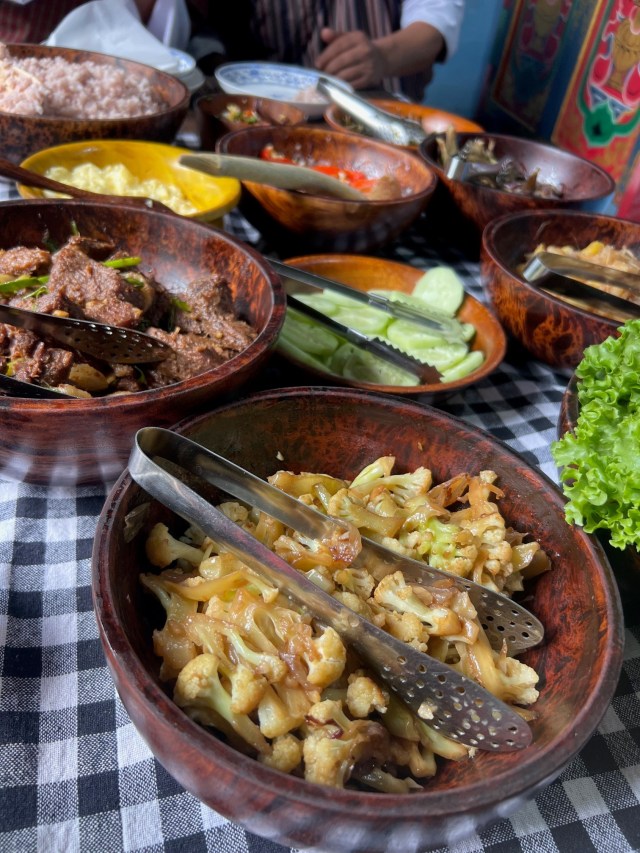
Now the fun part: Our amazing guide and driver treated us to two unique meals. One was a hot food picnic served on the sandy shores of the male, Pho Chhu, and the female river, Mo Chhu. We dined at the point where the two rivers flow together, forming the Puna Tsang Chhu river. The beautifully architected Punaka Dzong, the first capital of the country, overlooks this graceful convergence. We thought, “How civilized!” The other unique meal was a visit to a Bhutanese home, where we enjoyed a home-cooked meal in the family home. Most of the food was raised on the family farm just down the valley. The house was a representation of a typical family home. We sat on the floor and stuffed ourselves, merely sampling the array of dishes they prepared for us.
I don’t know what’s in store for Nepal or Tibet, but for now, Bhutan is one of the most peaceful, lovely, welcoming countries in the world, and its outlook on peace and life could be a model for the rest of the world.
I truly believe I’m going to heaven, but just in case I’m reincarnated, I’m praying my next life will be born in Bhutan.




❤️🥰🥰❤️
❤️❤️❤️🤣
Great Story Janie..
This is Puneet and Alpana. We met at Chitwan NP and would love to follow your blog
Hope you received an email notifying you of my blog about Nepal. Also hope you guys are still having a great time!
Hi this Puneet
Hello Puneet and Alpana! It was our pleasure to meet you and I’m hopeful we will stay in touch. Cannot wait to hear about your trip to Everest Base Camp! Good luck to you both!! Cheers to you!